


The Rise of AI at Work: How Businesses and Employees Can Keep Up
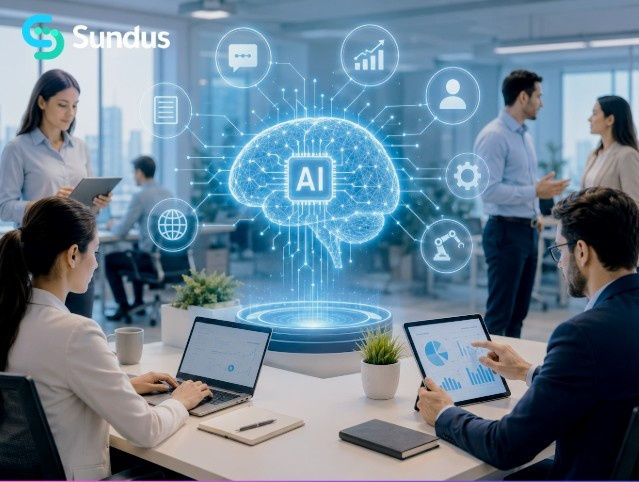
Artificial Intelligence (AI) is no longer something businesses only talk about for the future. It is already changing the way people work, communicate, hire, and make decisions. From automating daily tasks to helping companies improve productivity, AI in the workplace is becoming a key part of modern business operations.
Many businesses are using AI to save time, reduce costs, and improve efficiency. At the same time, employees are wondering how these changes may affect their jobs and careers. The good news is that AI is not only replacing tasks it is also creating new opportunities for businesses and workers who are willing to adapt.
In this blog, we will explore the rise of AI at work, how it is changing industries, and what businesses and employees can do to stay ahead.
What Is AI in the Workplace?
AI in the workplace refers to the use of intelligent technology to perform tasks that normally require human thinking. This includes activities such as data analysis, customer support, recruitment, communication, and workflow automation.
Today, businesses are using AI tools to:
Automate repetitive tasks
Improve customer service through chatbots
Analyze business data faster
Speed up hiring and recruitment processes
Enhance employee productivity
Improve decision-making
Instead of spending hours on manual work, employees can focus on more strategic and creative tasks.
Why Is AI Growing So Fast at Work?
The rapid rise of AI at work is mainly driven by the need for speed, efficiency, and better business performance.
Companies are under pressure to do more with fewer resources. AI helps businesses reduce manual effort, improve accuracy, and make smarter decisions.
Several factors are driving AI adoption in workplaces:
Increased Demand for Productivity
Businesses want to complete tasks faster and reduce operational delays. AI tools can handle repetitive work quickly, allowing teams to focus on higher-value tasks.
Better Decision-Making
AI systems can analyze large amounts of data in seconds. This helps business leaders make informed decisions based on trends, customer behavior, and performance insights.
Cost Savings
Automation reduces the need for repetitive manual work, helping companies' lower operational costs while improving efficiency.
Improved Customer Experience
AI-powered chatbots and virtual assistants help businesses respond to customer questions quickly, improving satisfaction and service quality.
How AI Is Changing the Workplace
AI is transforming almost every industry. While the impact may look different from one sector to another, the overall goal remains the same, working smarter and faster.
Recruitment and HR
AI is changing how companies hire employees. Recruitment teams now use AI to screen resumes, identify qualified candidates, and speed up the hiring process.
AI tools can also help HR teams with:
Employee engagement analysis
Workforce planning
Performance tracking
Candidate matching
This allows HR professionals to spend more time building relationships and improving employee experience.
Customer Service
Many businesses now use AI chatbots to answer common customer questions. This improves response time and provides support even outside business hours.
However, human interaction still matters. AI works best when it supports customer service teams rather than replacing them entirely.
Marketing and Sales
AI helps businesses understand customer behavior and personalize marketing campaigns.
Companies can use AI to analyze buying patterns, recommend products, and improve customer targeting.
This helps businesses increase engagement and improve conversion rates.
Finance and Accounting
AI tools can automate invoicing, expense tracking, fraud detection, and financial forecasting. This reduces human error and improves financial accuracy.
Healthcare
Healthcare organizations use AI to support patient care, analyze medical data, and improve diagnostics. AI can help professionals work faster and make informed decisions.
Will AI Replace Jobs?
One of the biggest concerns about AI at work is job replacement.
The truth is that AI may replace some repetitive tasks, but it is also creating new jobs and opportunities.
Roles that involve routine manual tasks may become more automated. However, jobs requiring creativity, emotional intelligence, leadership, and problem-solving are still highly valuable.
Instead of replacing employees completely, AI is changing how work is done.
For example:
Recruiters may use AI for resume screening but still conduct interviews
Customer service agents may use chatbots to handle simple questions while focusing on complex issues
Marketers may use AI analytics but still create campaign strategies
The future of work is likely to involve collaboration between humans and AI.
How Businesses Can Keep Up with AI
Businesses that fail to adapt to AI may struggle to stay competitive. Here are some practical ways companies can prepare for the future of work.
Invest in Employee Training
Employees need the right skills to work with AI technologies. Companies should offer training programs that help teams understand automation, data analysis, and digital tools.
Upskilling employees improves confidence and reduces fear around workplace changes.
Use AI to Support Employees
AI should be viewed as a tool that helps employees work better, not as a replacement.
Businesses that combine technology with human skills often see better productivity and employee satisfaction.
Start Small
Companies do not need to automate everything at once. Start with simple processes such as customer support, reporting, scheduling, or data entry. This helps teams adapt gradually.
Focus on Human Skills
As AI grows, human skills become even more important. Leadership, communication, creativity, emotional intelligence, and problem-solving will continue to be valuable.
How Employees Can Stay Relevant in an AI Workplace
Employees who adapt to change will have better career opportunities.
Here are ways workers can stay ahead:
Learn New Skills
Digital skills, data literacy, and AI knowledge are becoming important across industries.
Taking online courses or workplace training can improve career growth.
Stay Open to Change
Technology will continue evolving. Employees who stay flexible and learn new ways of working are more likely to succeed.
Focus on Creativity and Problem-Solving
AI is excellent at processing data, but human creativity and strategic thinking remain difficult to replace.
Build Communication Skills
Strong communication and teamwork skills are essential in an AI-driven workplace.
The Future of AI at Work
AI will continue transforming workplaces over the next decade. Businesses that embrace change will likely improve productivity and stay competitive.
At the same time, employees who continue learning and adapting will remain valuable in the job market.
The future is not about humans versus AI. It is about humans working alongside AI to create smarter, faster, and more efficient workplaces.
Conclusion
The rise of AI at work is changing how businesses operate and how employees perform their roles. While automation may replace some repetitive tasks, it is also creating opportunities for innovation, productivity, and career growth.
Businesses should focus on using AI to support employees, improve efficiency, and strengthen decision-making. Employees, on the other hand, should focus on learning new skills and staying adaptable.
Those who embrace AI rather than fear it will be better prepared for the future of work.
How Sundus Helps Businesses Adapt to the AI-Driven Workplace
As AI continues to reshape the workplace, businesses need the right balance between technology and human talent. This is where Sundus can help. As a trusted recruitment and outsourcing partner in the UAE and Saudi Arabia, Sundus supports businesses with workforce planning, talent acquisition, and staffing solutions that align with changing workplace demands.
Whether companies need skilled professionals for digital transformation or flexible workforce solutions, Sundus helps organizations build future-ready teams that can adapt, innovate, and succeed in an AI-driven business environment.
Frequently Asked Questions
1. What is AI in the workplace?
AI in the workplace refers to technology that automates tasks, analyzes data, and helps businesses improve productivity and decision-making.
2. Will AI replace jobs completely?
No, AI is more likely to automate repetitive tasks while creating new opportunities that require human creativity and problem-solving.
3. How can businesses benefit from AI?
Businesses can improve productivity, reduce costs, enhance customer service, and make better decisions using AI tools.
4. What skills are important in an AI-driven workplace?
Digital skills, communication, creativity, problem-solving, and adaptability are important for long-term career success.
5. How can employees prepare for the rise of AI?
Employees can stay competitive by learning new technologies, improving digital skills, and staying open to workplace changes.


